
Proscription as a Service: how to be a professional hater, pt. 1
On enemies, billionaire beefs that prove the Romans were right about everything, and why your girlfriend is not my archenemy

It’s the Ides of March, the most famous assassination in human history happened today, but the murder of Julius Caesar reminds me that I don’t have an archenemy, much less 60, in fact I’ve never had an archenemy though I have considered it’d be good to have one, and though I definitely think you should dump your girlfriend and get with me instead, I also don’t consider her to be an enemy of any sort. I don’t even have a term for this to reference besides ‘irrelevant’, though Romans had a word for when hatred becomes procedure which they called proscriptio.
Now, I don’t know about you, reader, but admittedly, I’ve always wondered what it’d be like to have an adversary, a rival, an enemy, an enemigo, someone who I feel nothing but enmity towards, someone who makes me feel a visceral hatred unlike any other, someone who fuels me to win.
Think about what the work of enemies has produced. Mozart and Salieri. Biggie and Tupac. Tonya Harding and Nancy Kerrigan. Kanye and linear thought. Bill Ackman and sensibility. Bugs Bunny and the Mouse. John McEnroe and everyone. The list of enemies goes on and on, but me and who?
I want an archenemy because I think it would make me better in the way that what you despise in someone else is usually the thing you haven’t dealt with in yourself, and having a person who embodies that standing across from you, winning sometimes or threatening your win, forces you to actually deal with it. An archenemy is the most honest mirror you’ll ever have because a professional hater has absolutely nothing to lose. Does that mean they’ll be honest? No, but they won’t be gentle and growth is never really gentle, is it? And an archenemy is someone on your level or far beyond it. Someone punching down isn’t an archenemy in the sense of being a true hater, just like someone with a grudge isn’t always an archenemy in waiting.
An enemy, however, is different from a grudge, and the distinction between the two is how professional haters occur. This essay series is all about professional haters given the billionaire beefs it documents (eventually).
Consider how Captain Ahab built an entire voyage around a whale that didn’t know he existed. Devastating! Consider how the Phantom of the Opera had architectural genius, engineering talent, and unlimited resources but used all of it to sit in the dark under Paris and be angry (which, fair, there are truly no happy French people in Paris ever, even with all that vacation time, food, sexual openness, etc). Consider how Wile E. Coyote has spent what must be millions in ACME products on something that is simply running. A grudge is a feeling, it can become more, but an enemy is a flesh and blood who hates you or something about you, which elevates feeling with force to conjure its capabilities into chaos.
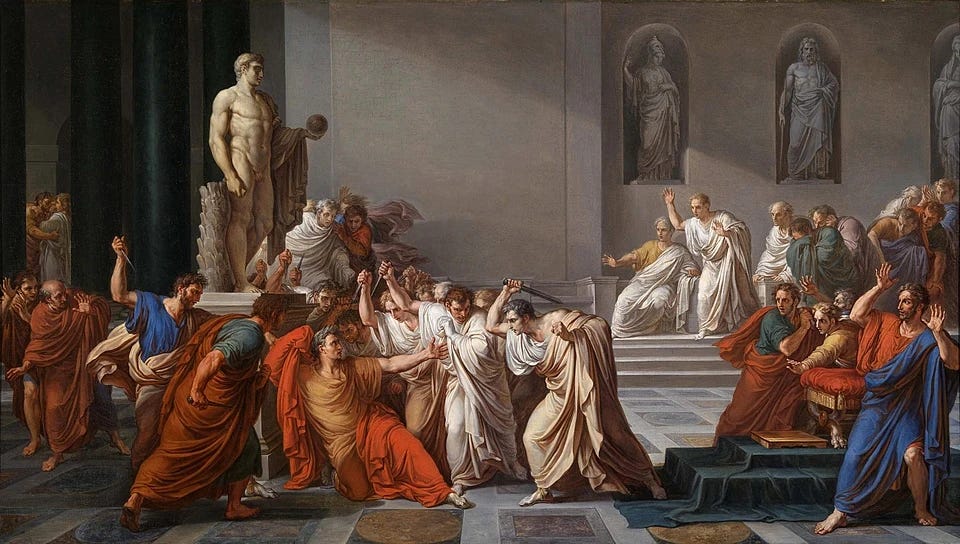
You know what happened on the Ides of March but in case you didn’t, spoiler alert, 60 Roman senators walked into the Senate with knives because one man had too much power and not one of them had the nerve to do it alone. This was the vendetta infrastructure of its time because it transcended grudge and grievance. Proscriptio was the Roman term for the formal blacklisting of enemies, a system that led to purges, exile, and death. Much like 23 stab wounds, or when you find out I’m with another man because you fumbled, vendetta infrastructure is what I’m going to call everything proscriptio stands for nowadays.
I like the Latin term, but what I’m describing in these essays is animosity turned into administration. Imagine vendetta, deployed like software as a service. Proscription as a service is here, considering how a grudge goes from being personal to becoming professional because it is scalable, and professional hating is where that archenemy stuff begins, in my opinion. Most of the time, grudge holders tend to escalate when they should be compounding. The really effective ones, the ones who actually change the landscape, are the people who build infrastructure and systems.
This all occurred to me sometime right before the New Year when Palmer Luckey replied to a joke I made about needing a Game of Thrones chart to track all the billionaire beef and said he’s “been thinking of paying someone to make an app called Blacklist that does exactly this, along with some interesting features that would make imposing consequences for bad actors much more practical.”
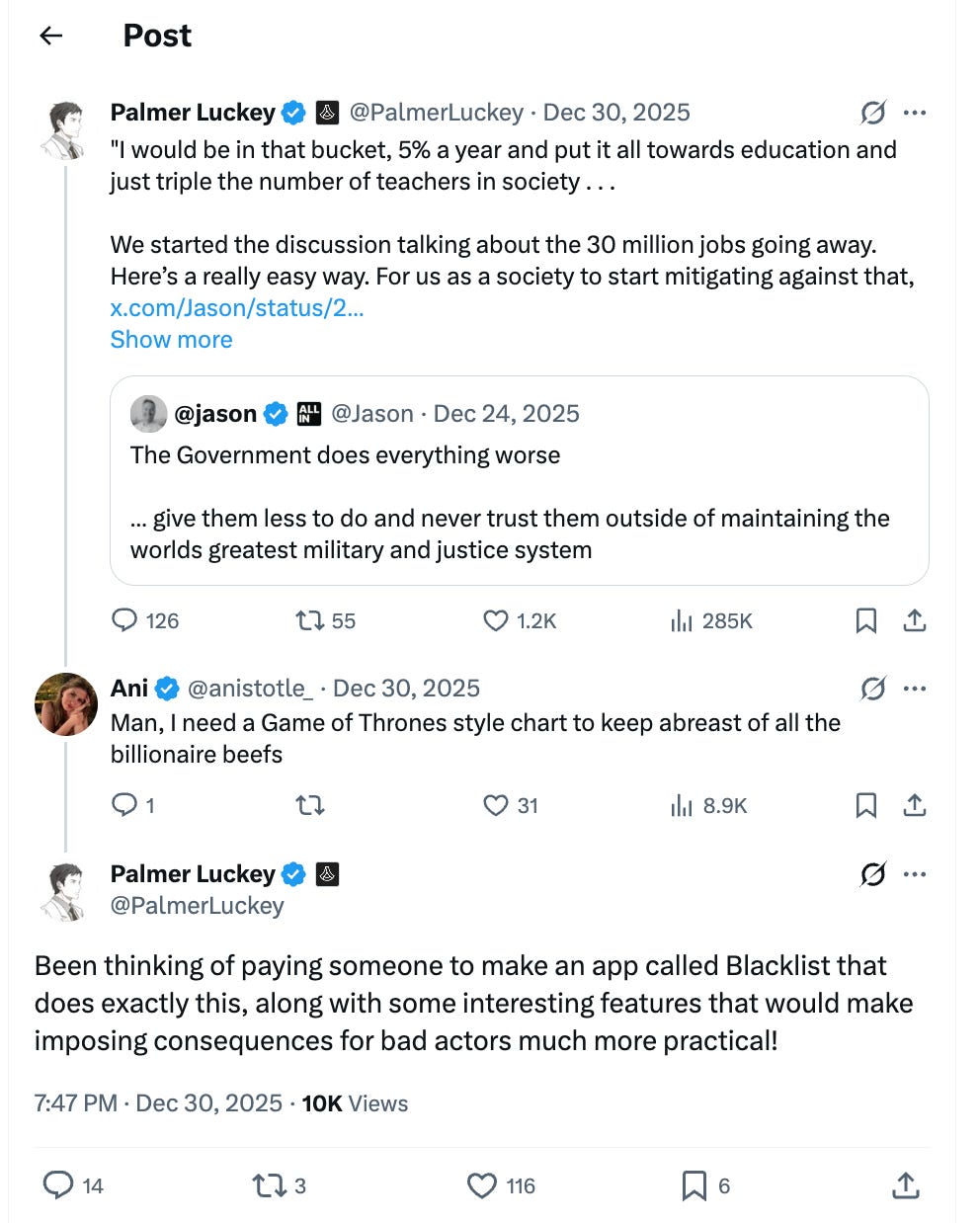
While I disagree with Luckey on most things, credit where credit is due, of all the billionaires running their mouths on social media, he’s the one I can see eye to eye with sometimes when it comes to the crusade for justice against someone who has wronged him (it’s some chud named Jason). Besides, when’s the last time you heard a white person say “imposing consequences for bad actors” and mean it with the vehemence meant by an ethnic parent gesturing towards, if not already holding, the looming chancla that metes justice?
Most people who build these systems don’t announce them. They quietly construct it and let people find out they’re on a list when their lives stop working. This is not that, it’s a public exchange, and proscriptio is deniable in a way that personal physical revenge or public revenge never is. If you stab someone, that is physical and visceral, but if someone’s name appears on a compliance flag and their bank account closes and their vendor contracts terminate and their career stalls, who did that? Which person? There’s no hand. No knife. No evidence. No alibi. Just algo, yes, yes, y’all.
It’s not because billionaires are petty, lord, everyone’s petty. It’s because when a billionaire gets petty nowadays, the pettiness generates a public ledger and infrastructure that the rest of us have to live and operate around. Let me explain, Luckey’s floated around blacklist app, cool, don’t blacklist me, don’t @ me, we’re good, but imagine getting shadowbanned on X by the algo or whatever and then not having access to your bank account? That does material harm.
So yes, billionaires. They’re just like us. And by that I mean, god, no amount of money is ever enough. Is it to stop the human, all too human need to get revenge? You’d think they’d check out, go buy a few islands, chill, spend the rest of their lives at peace finding new and interesting things to do enabled by the fact that their level of material security in life is so vast that it’s at a point of abstraction, it cannot be comprehended, it is just a figure. And yet the man worth three billion and the man worth eight hundred billion are both still up at night thinking about who wronged them. It haunts them to the point they want to make it structural.
Two thousand years later, modern billionaires are beefing like the ancients in the late Roman Republic except instead of knives they’ve got technology, lawsuits, sanctions lists, short positions, super PACs, payment platforms, social media platforms, drones, spaceships, hedge funds, banks, and a plethora of other things that belabors the point if I list it all out. The personalities are not the focus, but the infrastructure the personalities are building is, because professional hating in our modern day and age is proscriptio 2.0.
And I thought about it, and I kept thinking about it, and then I did what I always do when a topic stays on my mind, which is trace it back as far as it goes. All roads lead to Rome, 82 BC, and a man named Sulla who figured out how to turn a grudge into a government program. But that’s Part 2, and you’re not ready for Sulla yet, though he’d agree: break up with your girlfriend.
While you figure that out, in Part 2, I’m going to tell you about Sulla and how he invented the formal blacklist, about the Medici and how they turned banking into a weapon, about what Palmer Luckey and Elon Musk and others are building right now that would have made both Sulla and the Medici sick with envy, about a Texas billionaire who ended a congressman’s career reportedly over a mask, and more.